Read this order
Heart → Ring: Affection tied to commitment: a relationship becoming more settled, a shared promise or a wish to make the bond official.
What changes in reverse?
Ring → Heart: A commitment with emotional value. The agreement comes into focus first; Heart adds affection and the wish to be together.
Ring → Heart ↗A practical example
Imagine two people discussing a shared promise. Heart first emphasizes why they want the bond; Ring first emphasizes the promise and then adds affection. Neither order establishes an engagement or another person's feelings.
Check it against your question
Keep the actual order and ask which part of the example fits your situation. An example illustrates a possible reading; it does not establish facts or promise an outcome.
Compare two real-life contexts
For an established relationship, Heart + Ring can describe affection expressed through commitment. For a creative project, it can describe enthusiasm becoming a regular obligation. Ring + Heart starts with the agreement or cycle and emphasizes its emotional value. Neither order proves a proposal or another person’s feelings. Compare the reading with actual commitments, conversations and behavior; the same symbols can fit different kinds of attachment.
The meanings behind the pair
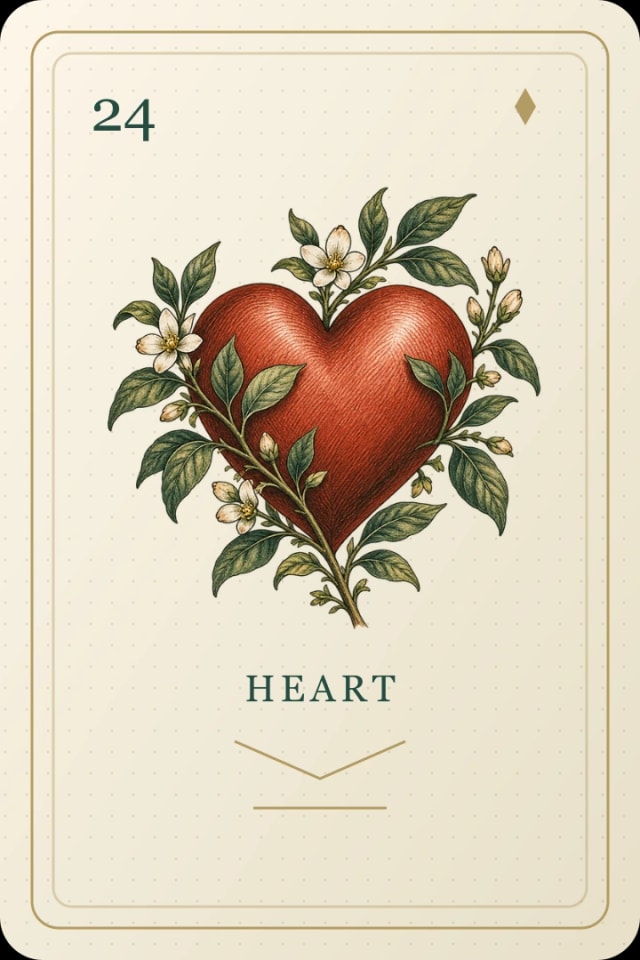
Heart: Heart is love, affection, enjoyment and emotional attachment. It shows what carries emotional value in the question.
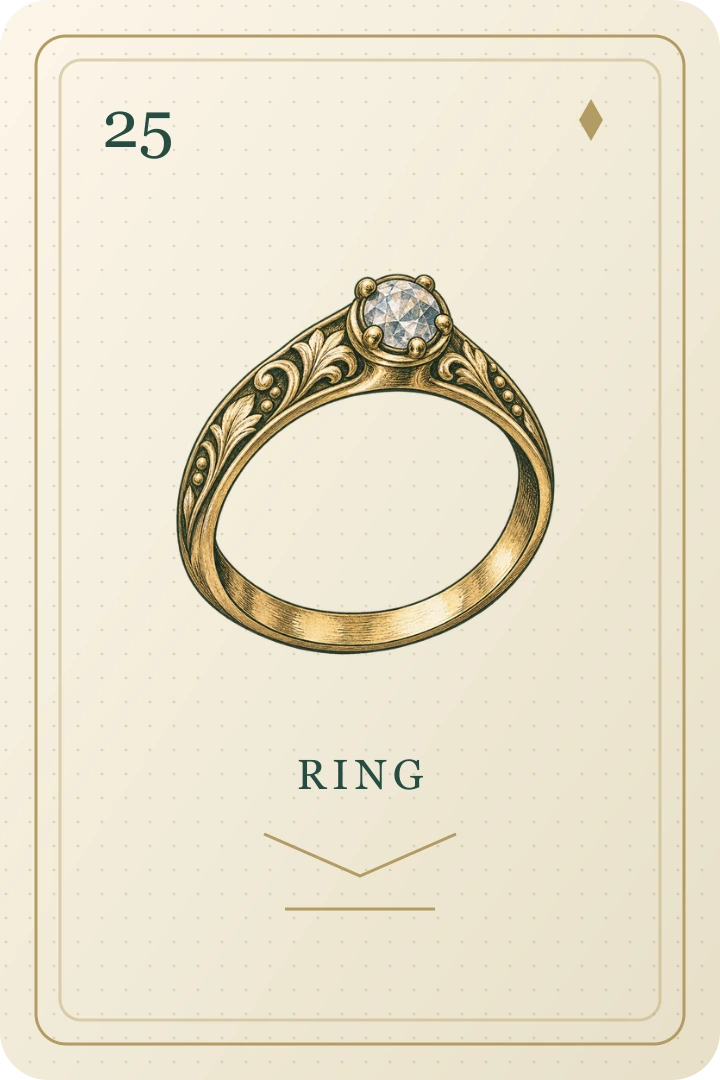
Ring: Ring is a commitment, partnership, contract or repeating cycle. It connects people or events through an agreement or something that continues to recur.
These examples show possible ways to read the pair. Your question and the other cards may change the meaning.